


Introduction
A Water Storage and Distribution System is a critical component of industrial and pharmaceutical water treatment infrastructure. It is designed to store treated water safely and distribute it efficiently to various points of use while maintaining water quality and preventing contamination. Industries such as pharmaceuticals, biotechnology, food and beverage, healthcare and manufacturing rely on these systems to ensure a continuous supply of high-quality water for their operations. A well-designed Water Storage and Distribution System helps maintain water purity, operational efficiency and compliance with industry standards.
What is a Water Storage and Distribution System?
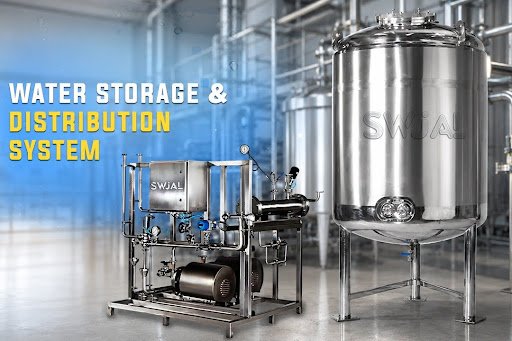
A Water Storage and Distribution System is an integrated setup that stores purified water in hygienic storage tanks and continuously circulates it through a closed-loop piping network to various points of use. The system is designed to maintain water quality by preventing microbial growth, stagnation and contamination during storage and distribution.
Typically manufactured using high-grade stainless steel, these systems include storage tanks, circulation pumps, piping networks, instrumentation and automation controls. They are widely used in pharmaceutical plants, biotechnology facilities, hospitals, food processing industries and other applications requiring reliable water supply and consistent water quality.
Water Storage and Distribution System Process
The Water Storage and Distribution process involves several important stages:
1. Water Storage
After purification, treated water is transferred to specially designed storage tanks. These tanks are constructed using hygienic materials and designed to minimize contamination risks while maintaining water quality.
2. Continuous Circulation
The stored water is continuously circulated through a closed-loop distribution system using sanitary pumps. Continuous circulation prevents water stagnation and helps maintain consistent water quality throughout the network.
3. Temperature Control
Depending on the application, water may be maintained at a specific temperature to inhibit microbial growth and preserve purity standards.
4. Distribution Network
The treated water is delivered through stainless steel pipelines to various points of use across the facility. The piping system is designed to ensure smooth flow and minimize dead legs where contamination may occur.
5. Monitoring and Control
Advanced sensors and automation systems continuously monitor critical parameters such as flow rate, pressure, temperature, conductivity and tank levels. This ensures reliable system performance and regulatory compliance.
6. Sanitization
Regular sanitization procedures are performed to maintain hygienic conditions and prevent microbial contamination within the storage tanks and distribution loop.
Benefits of Water Storage and Distribution System
A Water Storage and Distribution System offers several important advantages:
- Maintains Water Quality: Ensures treated water remains free from contamination during storage and distribution.
- Continuous Water Supply: Provides uninterrupted water availability for critical industrial processes.
- Prevents Microbial Growth: Continuous circulation and hygienic design reduce the risk of bacterial contamination.
- Improves Operational Efficiency: Supports smooth production operations by delivering water consistently to all usage points.
- Regulatory Compliance: Helps industries comply with pharmaceutical, food processing and quality standards.
- Reduces Maintenance Costs: Proper system design minimizes operational issues and equipment failures.
- Enhanced Reliability: Ensures dependable performance even during high-demand operations.
Applications of Water Storage and Distribution System
Water Storage and Distribution Systems are widely utilized across a broad range of industries, where consistent water quality and reliable supply are required:
- Pharmaceutical Industry: Purified water and Water for Injection (WFI) are distributed for manufacturing and cleaning processes, where stringent quality standards are maintained.
- Biotechnology Industry: High-purity water is supplied for research, development and production activities, where contamination-free conditions are demanded.
- Food and Beverage Industry: Treated water is provided for processing, cleaning and product formulation, ensuring safety and compliance are upheld at every stage.
- Hospitals and Healthcare Facilities: A reliable water supply is ensured for sterilization, laboratory applications and patient care, where uninterrupted availability is critical.
- Chemical Industries: Consistent water quality is supported across production processes, where precise formulation and process integrity are required.
- Cosmetic Industry: Purified water is supplied for the manufacturing of personal care and cosmetic products, where high purity and regulatory compliance are strictly observed.
Conclusion
A Water Storage & Distribution System is an essential part of any water treatment infrastructure, ensuring that treated water remains safe, pure and readily available for industrial use. Through hygienic storage, continuous circulation, advanced monitoring and efficient distribution, these systems maintain water quality while supporting uninterrupted operations. By improving reliability, reducing contamination risks and ensuring regulatory compliance, Water Storage & Distribution Systems contribute significantly to operational success. For organizations seeking reliable and high-performance solutions, Swjal Process Pvt Ltd is a trusted Water Storage and Distribution System Manufacturer in India, offering customized systems designed for maximum efficiency, quality and long-term performance.


Comments are closed