



Introduction
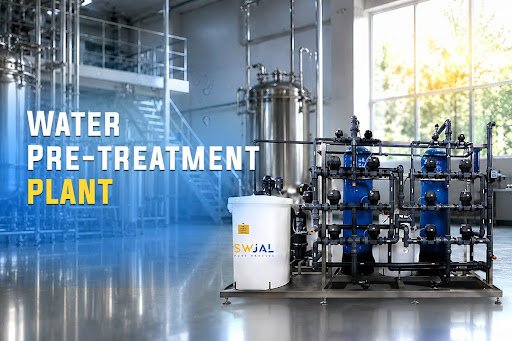
Water Pretreatment Plants play a crucial role in industrial water treatment by preparing raw water for further purification processes. Raw water obtained from sources such as borewells, rivers, lakes and municipal supplies often contains suspended solids, dissolved impurities, organic matter, hardness and other contaminants that can affect the performance of treatment systems and industrial equipment. A well-designed Water Pretreatment Plant removes these impurities effectively, ensuring improved water quality, enhanced equipment protection and efficient downstream operations.
What is a Water Pretreatment Plant?
A Water Pretreatment Plant is an essential water treatment system designed to remove unwanted contaminants from raw water before it enters advanced purification units such as Reverse Osmosis (RO), Demineralization (DM), Electrodeionization (EDI) or Ultrafiltration (UF) systems. It utilizes a combination of filtration and conditioning processes to improve feed water quality and protect downstream equipment from scaling, fouling and corrosion.
These systems are widely used across pharmaceutical industries, food and beverage plants, power generation facilities, chemical processing units and commercial establishments. Water Pretreatment Plants are customized according to raw water characteristics and process requirements to ensure reliable performance, operational efficiency and long-term system protection.
Water Pretreatment Plant Process
The Water Pretreatment process involves several important stages:
1. Raw Water Collection
The process begins with collecting raw water from sources such as borewells, rivers, lakes, reservoirs or municipal supplies. The water is stored in raw water tanks before treatment.
2. Screening
Large suspended particles such as leaves, sand, dirt and debris are removed using screens or strainers. This initial stage protects pumps and treatment equipment from physical damage.
3. Coagulation and Flocculation
Chemical coagulants are added to destabilize fine suspended particles present in water. During flocculation, these particles combine to form larger flocs that can be removed easily in subsequent stages.
4. Clarification
The formed flocs settle at the bottom of the clarifier through gravity separation. The clarified water collected from the top contains significantly fewer suspended impurities.
5. Multimedia Filtration (MMF)
Multimedia filters consisting of gravel, sand and anthracite layers remove remaining suspended solids and fine particulate matter, improving water clarity and quality.
6. Activated Carbon Filtration (ACF)
Activated carbon filters eliminate chlorine, odor, color, residual chemicals and organic compounds that may interfere with downstream purification processes.
7. Water Softening
Water softeners remove hardness-causing minerals such as calcium and magnesium through ion exchange technology, preventing scale formation and protecting equipment.
8. Cartridge Filtration
As the final pretreatment stage, cartridge filters remove fine particles before water enters advanced treatment systems, ensuring superior protection for RO membranes and other sensitive equipment.
Benefits of Water Pretreatment Plant
A Water Pretreatment Plant offers several significant advantages:
Improved Water Quality: Effectively removes suspended solids, chlorine, hardness and impurities from raw water.
Equipment Protection: Prevents scaling, fouling and corrosion in downstream treatment systems and industrial equipment.
Enhanced System Efficiency: Improves the performance and reliability of RO, DM, UF and other purification units.
Reduced Maintenance Costs: Minimizes equipment breakdowns and lowers cleaning and replacement expenses.
Extended Equipment Life: Increases the lifespan of membranes, pumps and treatment components.
Cost Savings: Reduces operational expenses by optimizing treatment efficiency and minimizing downtime.
Regulatory Compliance: Helps industries maintain required water quality standards and operational guidelines.
Applications of Water Pretreatment Plant
Water Pretreatment Plants are widely used in various industries and applications:
Pharmaceutical Industry: Provides suitable feed water for purified water systems and pharmaceutical manufacturing processes.
Food and Beverage Industry: Improves water quality used in production, cleaning and ingredient preparation.
Power Plants: Protects boilers and cooling systems from scaling and impurity-related damage.
Chemical Industries: Supplies treated water for manufacturing operations and process requirements.
Hospitals and Healthcare Facilities: Provides treated water for sterilization systems and laboratory applications.
Conclusion
A Water Pretreatment Plant serves as the foundation of an efficient water treatment system by preparing raw water for advanced purification processes. Through multiple treatment stages, it removes impurities, protects valuable equipment and enhances the performance of downstream systems. By improving water quality, reducing maintenance costs and ensuring operational reliability, Water Pretreatment Plants support sustainable and efficient industrial operations. For businesses seeking dependable and high-performance solutions, Swjal Process Pvt Ltd is a trusted Water Pretreatment Plant Manufacturer in India, delivering advanced systems tailored to diverse industrial requirements while ensuring long-term efficiency and consistent performance.


Comments are closed